“Manga, the vivid tapestry of art and story, are published by the tens of thousands every year, lining the shelves of bookstores far and wide. Yet, it’s a curious fate that most manga from less prominent magazines find themselves tucked away, their meticulously crafted color covers seldom catching the gaze of the wandering reader. The bulk of them, even with covers that may have demanded more effort than the content inside, are often left to the mercy of time and dust in some forgotten corner.
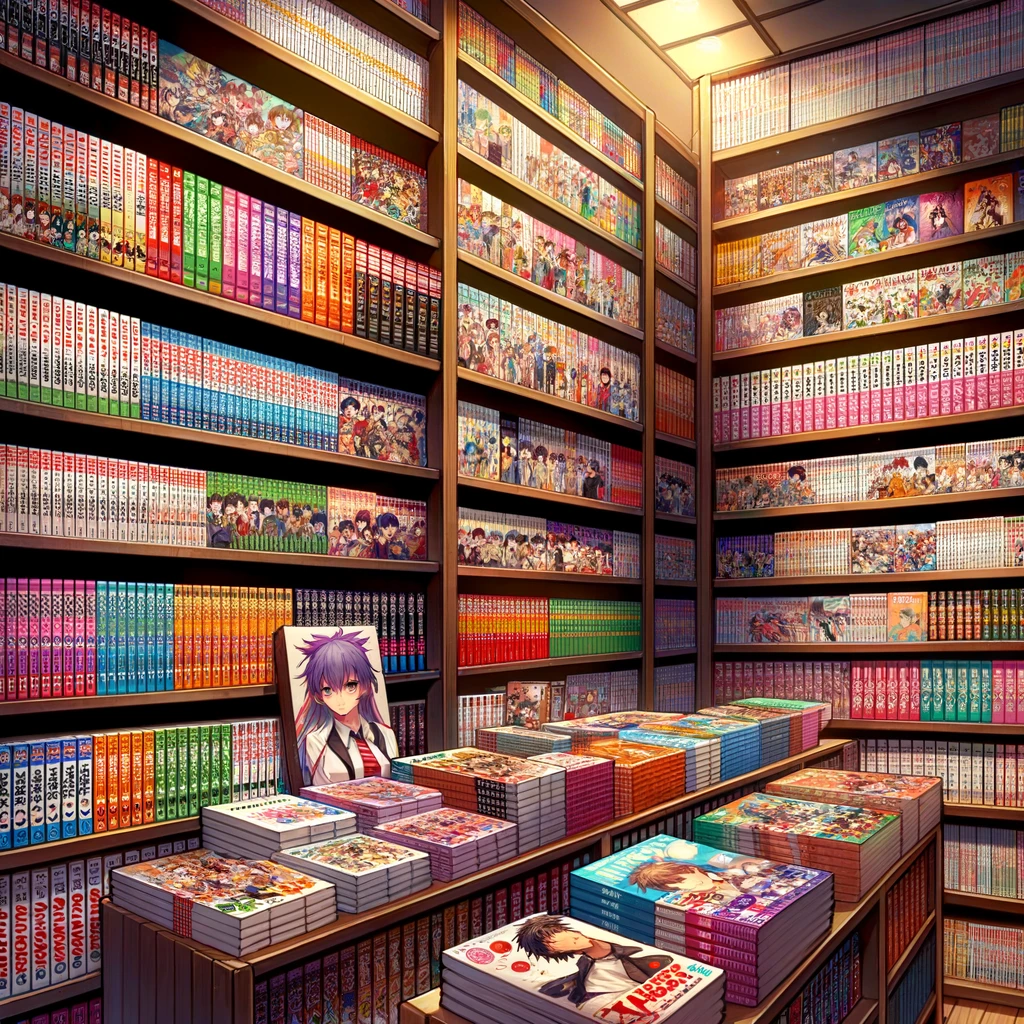
Bookstores, being the businesses they are, prioritize the well-selling, the well-known, and the buzzworthy. They stack these titles high and wide for all to see, maintaining a high per-square-foot value and nurturing a cadre of loyal customers who’ll return for each new release. It’s a calculated dance of marketing, essential for survival in a sea of stories.
Works That Will Not Become Digital Media
Old media mix works and minor titles often face complex rights issues, such as an inability to contact the author, the nonexistence of the publishing company or magazine, the absence of original contracts, or unclear content rights management, making digitization particularly challenging and often unachievable.
These works are bound to be lost in the near future.
Are you aware, for instance, that Yasuhiro Nightow, the creator of “Trigun,” once did a comic adaptation of “Samurai Spirits”? Or that a creator known for adult manga has done adaptations of “Final Fantasy”? Are you aware that even Nintendo, known for their stringent content management, has allowed comic adaptations of their titles, such as “The Legend of Zelda” and “Zelda II: The Adventure of Link”? Did you know about the comic adaptations of “Virtua Fighter” and “Vampire Hunter”? Or that “Street Fighter” was so creatively adapted into comics that the quality of the work led to its official importation?
The Cover Holds Many Intentions
Much like the motifs, symbols, allegories, and attributes found in Western paintings, manga covers offer the pleasure of interpretation rooted in deep cultural literacy.
Who is the intended audience, and what is the appeal? From the font used for the title on the cover to the characters and motifs that suggest the world of the work, and even the relationships between characters, the focus is on the “key elements” within the cover. Authors who have drawn their works in black and white now employ a variety of color techniques, from watercolor to acrylic to CG, to create these covers.
In a sense, creating manga covers is a different profession from drawing manga itself. It wouldn’t be an exaggeration to say that Japanese manga artists who take on this task are full-stack creators in the realm of illustration.
Of course, it should be noted that the assistance of book designers is undoubtedly a significant factor as well.
When it comes to the shorter works, the one-offs, the B4-sized anthologies, and the series that wrap up in just a few volumes, these are the rarities in the world of prominent display. It’s these concise narratives that often pack a punch, where the author’s philosophy, their message, and their artistic expression are most potent. They’re what you might call ‘works of art’ in the truest sense, even if that sometimes means they’re perceived as dull or uninteresting to the general reader. But it’s within these pages that you might find the power to stir your soul – through the artistry, the characters’ words, and the sheer joy of storytelling.
So, to you who claim an interest in the diverse world of Japanese manga, I say: Dare to delve deeper. Venture beyond the mainstream and seek out those hidden gems. There’s a wealth of wonder waiting for you.
And to the manga-loving geeks and nerds who’ve found their way here: Rejoice! The grand synthesis of painting and narrative is yours to claim, a treasure trove of art and story that is undeniably, uniquely your own.”